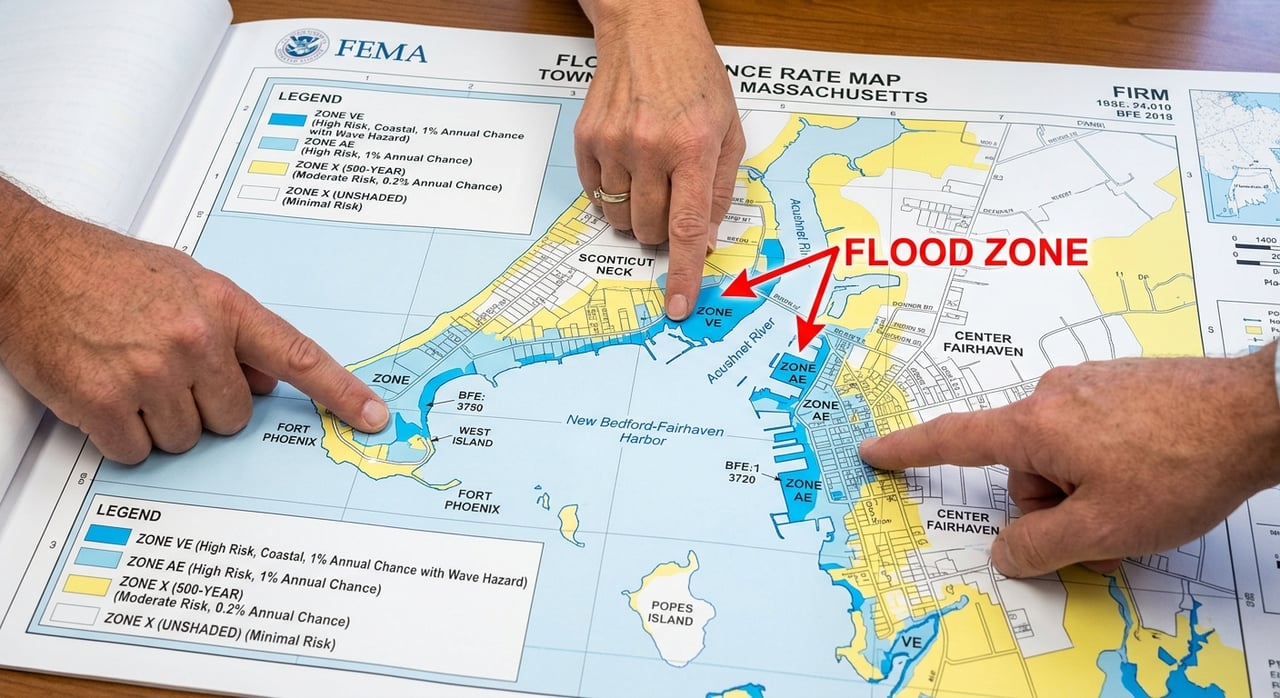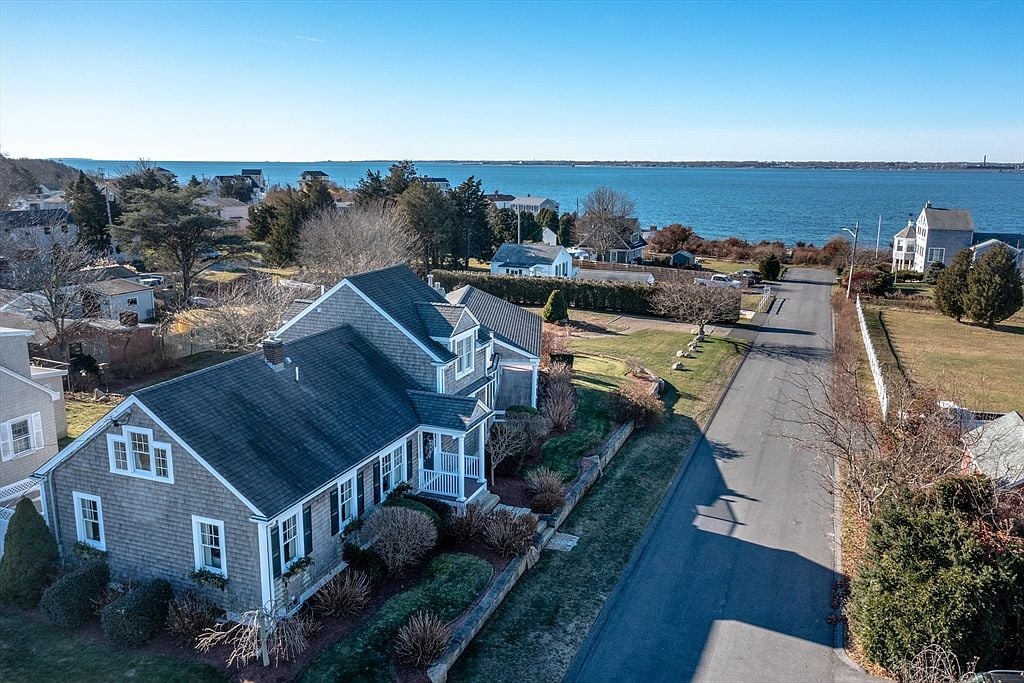
If you’re looking at homes in Fairhaven, Massachusetts, property taxes should be part of the conversation from the start.
The purchase price gets most of the attention, of course. But your property tax bill is one of those ongoing costs that can make a noticeable difference in your monthly budget.
And there’s a little more to Fairhaven property taxes than simply looking at the number on the current tax bill.
Here’s what I’d want every home buyer to understand before making an offer.
How Fairhaven Property Taxes Work
Fairhaven property taxes are based on the assessed value of the property and the town’s tax rate.
The basic calculation is:
Assessed value ÷ 1,000 × tax rate = annual property tax
For fiscal year 2026, Fairhaven’s residential tax rate is $9.20 per $1,000 of assessed value. The town reported an average single-family home value of $475,941 and an average property tax bill of about $4,379 for FY2026.
So, as a simple example, a home assessed at $500,000 would have an estimated annual tax of about $4,600 at the FY2026 residential rate.
That’s just an estimate. Your actual bill can be different because the assessed value of a particular property may be higher or lower than the purchase price, and other charges can affect the total.
Your Purchase Price Isn't the Same as Your Assessed Value
This catches some buyers off guard.
The price you agree to pay for a home and the town's assessed value aren't necessarily the same number.
Fairhaven's Board of Assessors is responsible for valuing property in town. Those values are maintained between certification years so that property owners are taxed based on their share of the value of taxable property in the community.
That means I wouldn't look at a home's asking price and immediately multiply it by the tax rate.
Instead, check the property's current assessment and tax history. Then look at how comparable properties are assessed.
That's a much better starting point.
Don't Assume the Current Tax Bill Will Stay the Same
This is one of the biggest things buyers need to understand.
A property's tax bill can change over time.
Fairhaven's tax rate changes from year to year. For example, the residential rate was $9.32 per $1,000 in FY2025 and decreased to $9.20 per $1,000 in FY2026. At the same time, the town's average single-family home value increased, which meant the average tax bill still went up.
That's a good example of why you can't look at the tax rate alone.
If property values rise, your assessed value can rise too. And even when the tax rate goes down, your actual tax bill can still increase.
Massachusetts property taxes also operate under Proposition 2½, which limits how much a community can raise through its property tax levy, subject to certain exceptions such as voter-approved overrides and exclusions.
For a buyer, the practical takeaway is simple: budget for some movement in your property taxes over the years.
What About Tax Bills After You Buy?
Fairhaven real estate tax bills are issued quarterly.
When you're buying a home, your attorney and closing team will handle the tax adjustments between the buyer and seller as part of the closing process.
You'll want to pay attention to those numbers because the tax amount shown at closing isn't necessarily the amount you'll owe forever. It's an adjustment based on the tax schedule and the timing of your purchase.
Your closing documents should spell this out for you.
Are There Property Tax Exemptions?
Yes, but you shouldn't assume you'll qualify.
Fairhaven offers several property tax exemptions for qualifying residents, including certain elderly residents, blind persons, disabled veterans, surviving spouses, and other qualifying individuals.
If you're buying a home and think you may qualify for an exemption, check with the Fairhaven Assessors rather than assuming the previous owner's exemption will transfer to you.
That's especially important when you're reviewing the seller's current tax bill.
What Should Home Buyers Look At?
When you're comparing homes in Fairhaven, I recommend looking at more than just the asking price.
Take a few minutes to check:
The property's current assessed value
The current annual property tax
Recent tax history
The current residential tax rate
Whether the property has any exemptions
Any special assessments or other charges
How nearby comparable properties are assessed
It can also help to look at the home's overall carrying costs.
A house that costs slightly more but has lower ongoing expenses could fit your budget better than a less expensive home with significantly higher taxes, insurance, or other costs.
What If the Home Has Been Recently Renovated?
This is another area where buyers should ask questions.
If a property has had substantial improvements, additions, or other changes, its assessment may change.
Don't panic about that. Just make sure you understand what you're buying and what the town's records show.
If you're looking at a home with a new addition, finished space, major renovation, or other significant improvement, I'd want to review the property details and current assessment before you make assumptions about future taxes.
If you're considering a property that needs work, it's also important to think about whether a home needs major improvements before you buy and how those projects could affect your overall housing budget.
Fairhaven Taxes Are Only One Piece of the Budget
When you're buying a home, it's easy to focus on the mortgage payment.
But your real monthly housing cost can include the mortgage, property taxes, homeowners insurance, utilities, maintenance, and possibly other expenses.
Property taxes are predictable enough that you can plan for them, but you want to use realistic numbers when you're figuring out what you can comfortably afford.
That's where good local information matters. If you're trying to understand the overall cost of living in Fairhaven, it's helpful to look beyond property taxes and consider the full range of expenses associated with owning a home in the area.
And if you're wondering how expensive it is to own a home in Fairhaven, comparing property taxes, insurance, maintenance, and other ongoing costs can give you a much clearer picture than looking at the purchase price alone.
If you're comparing two Fairhaven homes, don't just compare the purchase prices. Compare the full cost of owning each one.
A Quick Example
Let's say you're considering a Fairhaven home assessed at $475,000.
Using the FY2026 residential tax rate of $9.20 per $1,000:
$475,000 ÷ 1,000 × $9.20 = $4,370 per year
That's about $364 per month when spread across 12 months.
Again, this is a simple estimate using the FY2026 rate. Your actual tax bill can differ based on the property's assessment and any applicable charges or changes in future tax rates.
Still, doing this quick calculation can make it much easier to compare homes realistically.
Frequently Asked Questions About Fairhaven Property Taxes
Does Fairhaven have high property taxes?
Property taxes are just one part of the cost of owning a home in Fairhaven. Whether a particular property has a high or low tax burden depends on its assessed value, the current tax rate, and the home's overall price and expenses. It's best to compare the taxes on individual properties rather than judging the town by the tax rate alone.
Can my property taxes increase after I buy a home?
Yes. Your property taxes can change over time as the property's assessed value and the town's tax rate change. Buying a home doesn't lock in the current tax bill permanently.
Is the property tax based on what I pay for the house?
Not necessarily. Your purchase price and the town's assessed value are separate figures. The assessed value is what the town uses when calculating your property taxes.
Can I get a property tax exemption in Fairhaven?
Some homeowners may qualify for property tax exemptions based on age, disability, veteran status, or other circumstances. Eligibility requirements apply, so it's best to check directly with the Fairhaven Board of Assessors to see whether you qualify.
Should I consider property taxes when deciding how much home I can afford?
Absolutely. Property taxes are an ongoing cost, so they should be included when you're working out your monthly housing budget. Looking at the mortgage payment alone doesn't give you the full picture.
Buying a Home in Fairhaven?
Property taxes aren't something you need to figure out on your own.
When you're looking at a Fairhaven property, it's helpful to understand the current assessment, tax bill, recent history, and how the property compares with similar homes nearby.
The goal isn't just to find a home you love. You also want to know what owning that home will actually cost you.
If you're thinking about buying in Fairhaven or anywhere in Southeastern Massachusetts, having a local real estate professional by your side can make the process much easier. I can help you look at the numbers, compare properties, and understand the costs before you make a decision.
A little homework upfront can give you a lot more confidence when it's time to make an offer.
See why so many people love calling Fairhaven home—learn more here: https://susangordenryanluxury.com/neighborhoods/fairhaven
About the Author
Susan Gorden Ryan is a Luxury Real Estate Agent serving Southeastern Massachusetts & Rhode Island. You can visit susangordonryanluxury.com or call her at (508) 208-1927.