Buying a home in Wareham, MA is a big decision. You’re looking at the location, the condition of the house, the price, and probably a long list of things you want to check before making an offer.
One thing that’s easy to overlook is the property’s permit history.
A house may look great today, but what happened to it over the years? Was an addition built? Was a finished basement added? Were electrical, plumbing, gas, or other major projects done? And were those projects properly permitted?
Checking the permit history can give you another layer of information before you buy. It’s just one part of what buyers should know before putting a home on the market, especially when evaluating the condition and history of a property.
Start With Wareham’s Permit Records
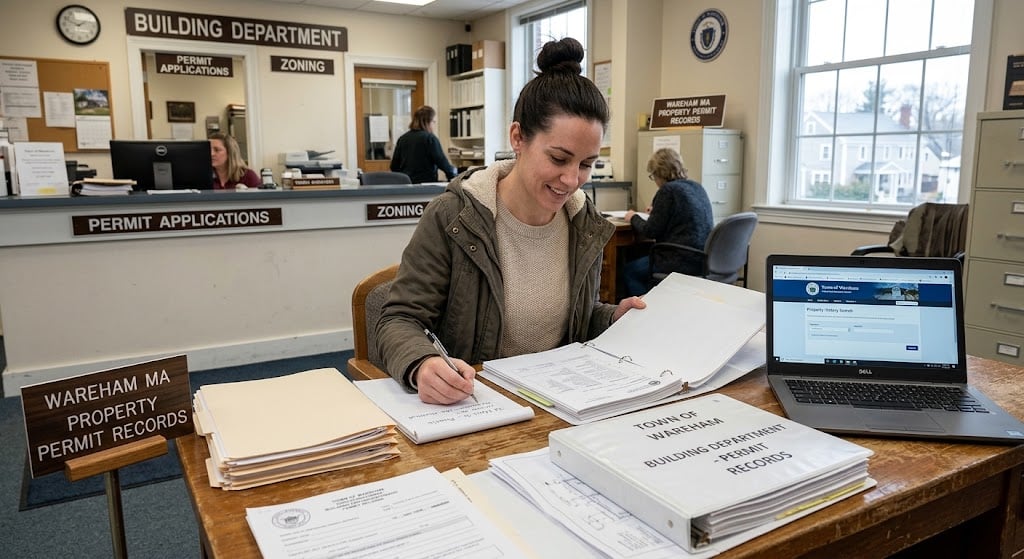
The Town of Wareham provides an online system where you can search public permit reports by job address or record number. This is a good place to start.
Search the property by its street address. Look beyond just the most recent permit. You’re trying to get a feel for the property’s history.
Wareham’s Inspectional Services Department handles permits for new buildings and renovations, along with electrical, plumbing, and gas work.
That means the records can tell you much more than whether the house had a recent renovation.
Look for More Than Building Permits
Don’t stop when you find a building permit.
Check for different types of permits connected to the property, including:
Building permits
Electrical permits
Plumbing permits
Gas permits
Mechanical or HVAC-related permits
Short-form building permits
This matters because a major renovation might involve several different permits. A kitchen remodel, for example, could have electrical and plumbing work attached to it even if the work isn’t obvious from the outside.
Pay Attention to the Permit Status
When you find a permit, look at its status.
A completed permit is generally a different situation from one that is still listed as active. If you see an older permit that remains active, that’s worth asking about before you move forward.
It doesn’t automatically mean there’s a problem. There could be a reasonable explanation.
Still, it’s something you want your buyer’s attorney, home inspector, or other appropriate professional to look into.
Compare the Permit History With the House
This is where the research gets interesting.
Walk through the property and compare what you see with what appears in the records.
Did the house have an addition?
Is there a finished basement?
Was a deck or other structure added?
Does the property have a newer bathroom or kitchen that appears to have involved substantial work?
As you compare the records with the physical property, knowing what to look for during a professional home inspection can also help you identify areas that deserve additional questions or closer attention.
If you see something that looks like a major improvement but can’t find anything related to it in the permit records, don’t jump to conclusions. Ask questions.
Permit records can be incomplete, older records may be harder to find, and not every type of work necessarily requires the same permitting process.
Check the Assessor’s Information Too
The Wareham Assessor’s Department is another useful resource when researching a property.
The Assessor’s Department maintains property information and can address questions about inconsistencies in property data.
Compare the assessor’s information with what you see at the property and what you find in the permit records.
For example, if the public property information describes a house one way, but the current property appears substantially different, that’s a reason to ask for more information.
It can also be helpful to consider understanding the different areas of Wareham when evaluating a property, since the neighborhood and surrounding area are part of the overall picture—not just the house itself.
You’re looking for a consistent story.
Search the Town’s Older Archives
If you’re researching an older Wareham property, don’t assume the current online records tell you everything.
The Town maintains an archive that includes older permit reports. The archive can be searched by keyword, archive category, and date range.
This can be especially helpful when you’re looking at a property that has been around for decades.
Wareham moved from a paper application process to an online permitting system in February 2019, so older properties may have records that predate the current online process.
If you don’t find what you’re looking for online, contact the town rather than assuming no permit ever existed.
Ask Questions When Something Doesn’t Match
Let’s say you find a permit for an addition, but the permit is still active.
Or you see a finished space that doesn’t seem to match the property records.
Or you find permits for electrical and plumbing work but can’t tell whether the related project was completed.
Those are good reasons to ask questions before buying.
The Town of Wareham lists Inspectional Services at 508-291-3100, ext. 3190 for questions about its permitting system.
You can also bring anything unusual to your real estate attorney or other professionals involved in your due diligence.
Don’t Treat Permit Research as a Substitute for an Inspection
Permit research and a home inspection serve different purposes.
A permit search can help you understand what work was reported to the town. A home inspection looks at the physical condition of the property.
You want both pieces of information.
A permit record won’t tell you that a roof is near the end of its useful life. An inspection won’t necessarily tell you whether an old addition was properly permitted.
Together, they can give you a much clearer picture.
FAQs About Property Permits in Wareham, MA
How do I check a property’s permit history in Wareham?
Start with the Town of Wareham’s public permit records. Search using the property address and review the permits associated with the property.
For older homes, you may also need to look through the town’s archives or contact Inspectional Services if the records you need aren’t available online.
What if I find an unclosed permit?
Don’t assume the property has a serious problem just because you find an older open permit.
An unclosed permit is a reason to ask questions. Find out what work the permit covered, when it was issued, and whether the town considers anything outstanding.
Before purchasing, you may want your attorney or another qualified professional to help determine what needs to be resolved.
Can I buy a house with an open permit?
It may be possible, but you should understand exactly what the open permit involves before moving forward.
Depending on the situation, an open permit could affect the transaction, future renovations, financing, insurance, or your ability to sell the property later.
The right next step depends on the specific property and permit, so it’s worth getting professional advice rather than guessing.
What if I can’t find a permit for an addition or renovation?
First, check whether you’re searching the records correctly and whether the work is old enough that the records may be archived elsewhere.
If you still can’t find a permit, ask the town about the property.
You should also bring the issue to your real estate attorney. They can help you understand what the missing record could mean for the purchase.
Does every home improvement require a permit?
No. Permit requirements depend on the type and scope of the work.
That’s why you shouldn’t look at a property and assume that every change you see should have a permit attached to it. When you’re unsure, ask the Town of Wareham or an appropriate professional.
Should I check permits before making an offer?
If you have access to the property information and can reasonably do so, checking early can be helpful.
You don’t want to discover a significant permit issue after you’ve already become emotionally attached to the house or spent money moving through the transaction.
That said, permit research is only one part of your due diligence. Your attorney, home inspector, lender, and other professionals may each uncover different pieces of the property’s history.
Closing Thoughts
Buying a home is a big investment, and the more you know about the property before closing, the better.
Permit records won’t answer every question. They can, however, give you useful clues about renovations, additions, mechanical work, and other changes made to the property over time.
If something doesn’t line up, don’t ignore it. Ask about it.
That’s especially true with older homes, properties that have had several renovations, or houses where the current condition looks very different from the public records.
A little research now can save you from some unpleasant surprises later.
If you’re considering buying a home in Wareham or elsewhere in Southeastern Massachusetts, having a local real estate professional who knows the area can make the process easier. I’m always happy to help you look at the bigger picture and connect you with the right professionals when questions come up during your purchase.
Discover more about Wareham and what makes it such a desirable place to live here: https://susangordenryanluxury.com/neighborhoods/wareham
About the Author
Susan Gorden Ryan is a Luxury Real Estate Agent serving Southeastern Massachusetts and Rhode Island. She helps buyers and sellers navigate the local real estate market with careful attention to the details that matter before and during a transaction. You can learn more at susangordonryanluxury.com or call (508) 208-1927.