If you’re thinking about building, adding on, or renovating a home in Marion, MA, there’s one thing you’ll want to check before you get too far into the plans: Is the property in a floodplain or another regulated coastal area?
In Marion, that answer can affect much more than your building permit. It can change the design of the project, the elevation of the structure, the approvals you need, and how long the process takes.
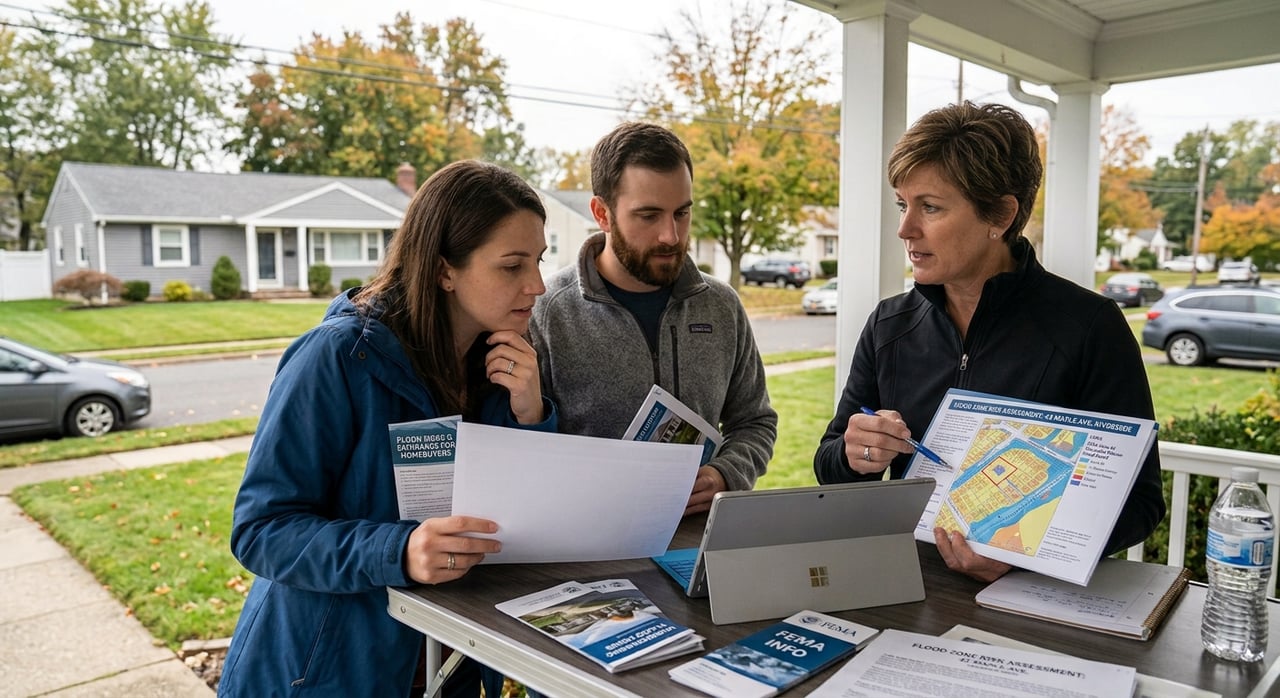
Marion has a lot of waterfront and low-lying property, so floodplain rules come up fairly often. The Town maintains FEMA Flood Insurance Rate Maps (FIRMs), which identify areas subject to the 1% annual chance flood. These areas are known as Special Flood Hazard Areas.
If you’re buying a property or planning a renovation, it’s worth figuring this out early.
Start With the FEMA Flood Map
The first step is checking the property’s flood zone.
FEMA flood maps show areas considered at risk from the base flood and identify different flood hazard zones. Marion’s current FEMA maps became effective in 2012, with later map revisions taking effect in 2014. The Town’s Building Department also keeps copies of the maps.
Your flood zone matters because different zones can have different construction requirements.
For example, Massachusetts requirements address A Zones and V Zones differently. V Zones are coastal high-hazard areas where wave action creates additional risks. Massachusetts building requirements can also call for additional elevation above the base flood elevation.
Don’t assume that because a property has never flooded, the floodplain rules don't apply. The FEMA designation is based on mapped flood risk, not just a property's past experience.
A Building Permit May Be Only Part of the Process
This is where things can get confusing.
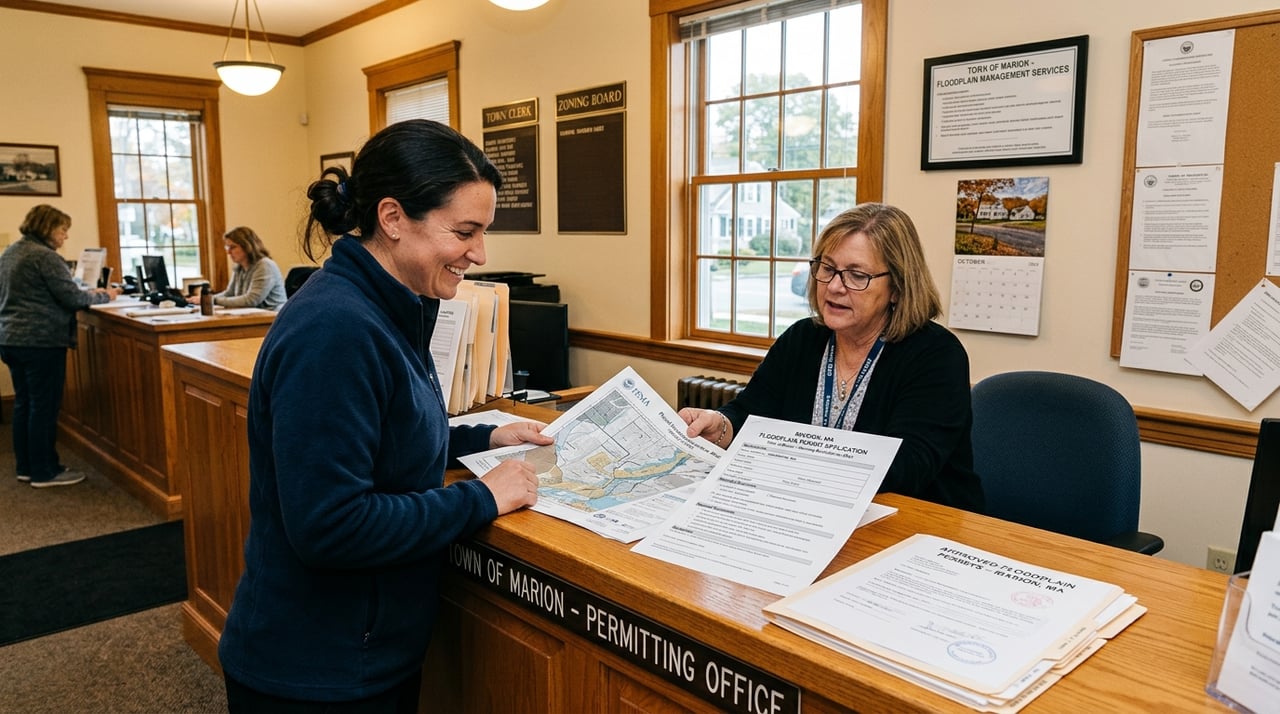
Marion’s Building Department handles the Massachusetts building, electrical, plumbing, gas, and related construction codes, along with applicable zoning requirements.
But a floodplain project may also involve the Conservation Commission.
Massachusetts' Wetlands Protection Act regulates work in wetland resource areas, including land subject to flooding and coastal storm flowage. Depending on the property and the work you're proposing, you may need a Determination of Applicability or a Notice of Intent.
Marion has its own Conservation Commission standards as well. Work within certain wetland resource areas, buffer areas, riverfront areas, and land subject to coastal storm flowage may require Conservation Commission review.
That means a project that looks like a straightforward addition or renovation can involve several different approvals.
Renovations Can Trigger Floodplain Requirements
This is one of the things homeowners sometimes discover too late.
You may not be building a brand-new house. You might simply be adding living space, replacing a foundation, rebuilding after storm damage, or making a major renovation.
Floodplain requirements can still apply.
Massachusetts guidance says the State Building Code governs construction, renovation, repair, reconstruction, demolition, and changes in use. Floodplain provisions can require flood-resistant construction and elevation standards for new and substantially improved buildings.
The cost and scope of a renovation can therefore matter. If you're planning a major project, don't wait until construction drawings are finished to find out whether the project falls under additional floodplain requirements.
It’s much easier to make that determination before you've spent money on plans that may need to be changed.
Pay Attention to the Base Flood Elevation
If your property is in a flood hazard area, the Base Flood Elevation, or BFE, becomes an important number.
The BFE represents the expected elevation of floodwater during the base flood. FEMA's maps and flood studies are used to establish these elevations.
Massachusetts has adopted specific design flood elevation requirements. Under Marion's current published building-code amendments, the design flood elevation is generally the BFE plus one foot in A Zones and the BFE plus two feet in V Zones, subject to the applicable code provisions.
This can have a real effect on the design of a home.
It can affect foundation height, entrances, stairs, parking, utilities, mechanical equipment, and the overall look of an addition or new structure.
That's why it's smart to have the flood elevation reviewed before you finalize architectural plans.
Coastal Wetlands Can Add Another Layer
Floodplain rules aren't the only concern in a coastal community like Marion.
The Massachusetts Wetlands Protection Act covers a wide range of coastal resource areas, including beaches, dunes, marshes, coastal wetlands, and land subject to coastal storm flowage. Construction and other alterations in these areas can require review by the local Conservation Commission.
Marion's Conservation Commission also has local standards that apply to certain wetland resource areas and coastal properties.
So if you're looking at a waterfront property, don't just check the FEMA map. Wetlands and coastal resource boundaries deserve a closer look too.
What Happens If You Need Conservation Commission Approval?
The process depends on the project.
For some projects, Marion's Conservation Commission may use a Request for Determination of Applicability to decide whether the Commission has jurisdiction and whether a Notice of Intent is required.
A larger project that involves regulated resource areas may require a Notice of Intent. The application can involve plans, supporting documentation, abutter notification, and professional plans where applicable. A public hearing is part of the process.
This is one reason timing matters.
If you're hoping to start construction in a particular season, work backward from that date. Give yourself room for surveys, engineering, permit applications, hearings, revisions, and inspections.
Don't Forget About Zoning
Floodplain approval doesn't automatically mean the entire project is approved.
You may also need zoning approval depending on what you're proposing. An addition, new structure, change in use, or other improvement could raise questions about setbacks, lot coverage, height, parking, or other zoning requirements.
It's better to identify those issues before you buy the property or commit to a particular renovation plan.
What About Unpermitted Work?
This is especially important if you're buying an older home in Marion.
The Town advises homeowners to check with the Building Department when they're unsure whether work requires a permit. Unpermitted improvements can create problems with insurance claims, building code compliance, future sales, and zoning.
That's worth keeping in mind when you're reviewing a property.
Maybe there's an older deck. An enclosed porch. A finished lower level. An addition that doesn't quite match the original footprint.
Don't automatically assume everything was properly permitted.
Before you make plans around an existing improvement, find out what was approved and what wasn't.
What Should You Check Before Buying or Renovating?
If you're considering a property in Marion, I'd start with these questions:
Is the property located in a FEMA flood hazard area?
What is the property's flood zone?
What is the applicable base flood elevation?
Is the property affected by coastal storm flowage?
Are there wetlands or other regulated resource areas on or near the property?
Will the proposed work require Conservation Commission review?
Will the project require a Notice of Intent or Determination of Applicability?
Are there zoning restrictions that could affect the project?
Are existing additions, decks, finished spaces, or other improvements properly permitted?
Will the project trigger additional flood-resistant construction requirements?
Will an elevation certificate, survey, engineer, or architect be needed?
You don't need to figure all of this out by yourself.
The right professionals can help you determine what applies to a specific property before you spend heavily on design and construction.
Frequently Asked Questions About Floodplain Permits in Marion, MA
Do I need a permit to renovate a home in a floodplain?
Possibly. The answer depends on the type and scope of the work. Building, structural, electrical, plumbing, and other work may require permits, and projects in regulated coastal or wetland areas may require additional review.
If you're planning a substantial renovation, it's worth checking with the Marion Building Department before work begins.
Does being in a flood zone mean I can't renovate?
No.
Being in a flood zone doesn't automatically prevent you from renovating or improving a property. It can mean that the project has to meet additional construction, elevation, flood-resistant design, or permitting requirements.
The key is knowing the property's flood zone and understanding the rules before you finalize your plans.
What is the difference between a flood zone and a wetland area?
They're related, but they're not the same thing.
A FEMA flood zone is based on mapped flood risk. A wetland or coastal resource area is regulated under state and local environmental rules.
A property can be affected by one, the other, or both. That's why checking only the FEMA map may not give you the complete picture.
What is a Base Flood Elevation?
The Base Flood Elevation, or BFE, is the elevation to which floodwater is expected to rise during the base flood.
If you're building or substantially improving a structure in a regulated flood area, the BFE can affect how high the structure and certain building components need to be.
For a coastal property, this is one of the numbers your architect, engineer, builder, or surveyor will want to know.
Can I finish a basement in a floodplain?
This can be complicated.
Floodplain regulations can restrict how enclosed areas below the required flood elevation are used and constructed. The rules can depend on the flood zone, the type of construction, and how the space is designed.
If you're considering finishing a basement or lower level, check the requirements before doing the work. A finished space that doesn't meet the applicable rules can create problems later.
Do I need Conservation Commission approval for an addition?
Maybe.
It depends on where the property sits and where the proposed work will take place. If the project affects a regulated wetland resource area, buffer area, coastal resource area, or land subject to coastal storm flowage, Conservation Commission review may be required.
A survey or other professional assessment may be needed to determine exactly where those boundaries fall.
Can floodplain requirements affect the cost of a renovation?
Yes.
Raising a structure, changing a foundation, moving mechanical equipment, adding flood-resistant materials, hiring engineers or surveyors, and going through additional permitting can all add to the project cost.
That doesn't mean a project isn't worth doing. It means those costs should be considered before you set your renovation budget.
Should I check the floodplain before buying a home in Marion?
Absolutely.
If you're buying a home with plans to renovate, add an addition, rebuild, or make other major improvements, find out about the property's flood zone and other restrictions during your due diligence period.
You may love the house. But if your plans aren't feasible or will cost considerably more than expected, that's something you want to know before closing.
A Smart First Step for Marion Homeowners
If you're planning to build or renovate in Marion, don't wait until you're ready to pull the building permit to start asking questions.
Start with the property itself.
Look at the FEMA flood map. Check for wetlands and coastal resource areas. Review the zoning. Look into the permit history. Then talk with the appropriate Town departments and qualified professionals about what your specific project will require.
That little bit of homework can save you from redesigning plans, delaying construction, or discovering an expensive problem after you've already bought the property.
And if you're considering buying a home in Marion because you want to renovate or expand it, bring those questions into the real estate process early. The right property isn't just the one you love today. It's one that can work for what you want to do with it tomorrow.
Understanding the different parts of Marion you may want to consider when buying can also help you think beyond the house itself and consider location, waterfront exposure, privacy, and the practical differences between neighborhoods.
Closing Thoughts
Marion is a special place to own property, especially if you're drawn to its coastal setting, older homes, water views, and character. Those same qualities can make construction and renovation a little more complicated.
That's not necessarily a bad thing.
It just means you need to know what you're getting into.
Before buying or starting a major project, take the time to understand the flood zone, elevation requirements, wetlands, zoning, existing permits, and any approvals that may be required. When you know those details upfront, you can make decisions with a much clearer picture of the property and the project.
If you're considering buying or selling a home in Marion, MA, or elsewhere along the South Coast, selling a home in Marion is another part of the real estate process worth understanding before you move forward.
If you're preparing a property for sale, getting your Marion home ready for its first showing can also help you think through presentation and the improvements worth addressing before buyers walk through the door.
Explore the unique character of Marion and see what makes this community stand out here: https://susangordenryanluxury.com/neighborhoods/marion
This article is provided for general informational purposes and is not legal, engineering, architectural, permitting, or environmental advice. Floodplain, wetlands, zoning, and building requirements can vary by property and may change over time. Always confirm current requirements with the appropriate Town, state, and federal authorities and qualified professionals.
About the Author
Susan Gorden Ryan is a Luxury Real Estate Agent serving Southeastern Massachusetts & Rhode Island. She helps buyers and sellers navigate the details that can matter when purchasing and selling coastal and luxury properties. You can learn more at susangordonryanluxury.com or call (508) 208-1927.